
Happy New Year, everyone! After a tumultuously bearish 2022, the reset of the calendar to 2023 is also apparently providing a psychological reset to the participants in the stock market. The Santa Clause rally, as previously defined by commentators, took place ever so slightly during the applicable time period, which has been defined as the last five trading days of the outgoing year and the first two trading days of the new year. This 2022 Santa Clause rally, however, took place after a terrible overall December for 2022. Nonetheless, the first two weeks of January in this new year have represented a more significant and sustained bull run towards the upside in the major market indices. This period in the stock market well illustrates the manic-depressive tendencies of “Mr. Market”, the metaphorical person concocted by value investing legend Benjamin Graham. “Mr. Market” provides market prices while hyperventilating over market and news developments, both overreacting in a positive and negative fashion as circumstances (partially) warrant. In perhaps all periods, but especially in the current atmosphere, “Mr. Market” so astutely describes the collective movement of the stock market and its participants.
Within the context of these gyrations in the stock market, here is StockMarket-FIRE.com’s early 2023 stock market review, outlook, and commentary. This discussion is offered only for informational and educational purposes, not as individualized investment advice to anyone.
I. Macroeconomic Backdrop: Favorable Inflation and Employment Data Fuel Recent Market Bull Run; Considerable Uncertainty Remains With Recession Prospects and Duration of Interest Rate Increases
This most recent bull run in the markets has occurred amid a reduced inflation reading for the prior month in December 2022’s Consumer Price Index (CPI) of 6.5% — still much higher than the Federal Reserve’s target 2% inflation rate but a reduction from the November 2022 7.1% reading and the 9.1% reading from the middle of 2022. Core CPI (headline CPI minus food and energy) is also lower. However, services and housing inflation remain elevated, of particular concern to the Federal Reserve. Nevertheless, the December jobs report reflected a lower near 1% wage increase level along with continued strong employment numbers, which together suggest that wage inflation is moderating even as employment remains strong. This combination suggests that the much maligned “soft-ish landing” sought by Federal Reserve Chairman Jerome Powell is still a plausible economic near-term prospect.
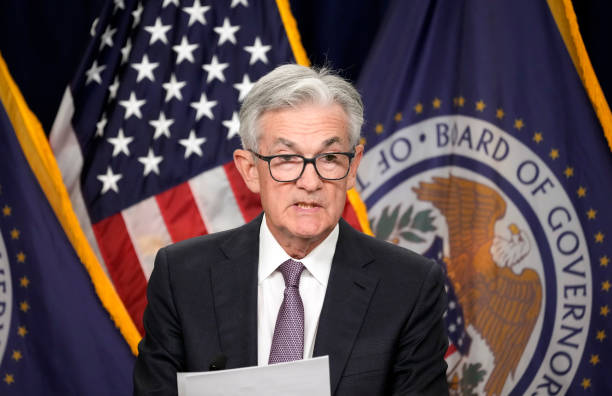
Even as inflation is declining and economic growth is pointing towards at least moderate continuing growth, most economists and market analysts still expect some kind of mild recession towards the second half of 2023 or first half of 2024. After all, the rapid run-up in interest rates over 2022 and destabilizing influence of generations-high inflation would be expected to shock the economy, and some kind of recession would almost appear inevitable, even as the forces leading to that recession may be abating. Indeed, if there is a recession, this could be the most widely anticipated recession in recent memory, given that many recessions creep up unexpectedly.
Perhaps the most significant point of disagreement between market participants and policymakers at this time is the expected course of interest rates towards the second half of 2023. Based on derivatives markets and intermediate term bond prices and yields, many market participants are anticipating that the Federal Reserve will lower interest rates during the second half of the year, which could be expected to benefit the overall direction of the stock market. Members of the Federal Reserve Board, including Chairman Powell, have continuously and robustly stated that they intend to keep elevated interest rates throughout the year without any reduction, while also maintaining that they will be “data-dependent” based on economic conditions as they develop in the ensuing months. Their concern is that inflation, though recently declining, either may persist at above average levels above 3% or 4%, or that they may even increase after initially declining. If followed by the Fed, the “higher for longer” mantra concerning interest rates will not necessarily be beneficial for prices in the stock market, though the objective of controlled inflation should be viewed as a necessary precondition for stable future economic growth and stock market appreciation.
As the market continues to obsess over interest rates and recessionary concerns, Mother Nature has been helping to subdue recessionary forces with unexpectedly mild winter weather in the U.S., as well as in Europe. As a result, price levels for natural gas needed to provide heat and generate electricity have been lower than expected, as natural gas levels available in storage have been robust. Indeed, Europe previously had been viewed as headed towards a severe recession in the event of a cold winter exacerbated by restrictions over off-limits Russian supplies of gas and oil as a consequence of the war in Ukraine. Such a severe recession could have been expected to have a ripple-effect to some degree to the rest of the world, including the U.S. Without such a severe recession or extreme scarcity in natural gas stockpiles, inflation and recession concerns both to some extent should be considered less threatening in the near term.
At the same time as the unexpected benefit of mild winter weather, the end of China’s “Zero-Covid” lockdown policy is resulting in an anticipated increase in China’s economic activity. The re-opening of factories in China should also be expected to alleviate some of the supply-chain difficulties experienced by manufacturers and other businesses that conduct international commerce. Chinese demand for goods could potentially fuel some degree of added inflation in the U.S. and elsewhere, but this potential hazard is offset by the expected inflation-lowering benefits of an improved supply chain and reduced degree of severity of any imminent recession, given that Chinese demand should allow for continued growth of business in the crucial materials, automotive, and technology sectors.
II. Political Backdrop: Divided Government Finally Confirmed With Speaker Election, as Uncertainty Over Debt Ceiling Standoff Looms
Since the start of 2023, the political situation in Congress with the return of divided government has been settled, in a way that is beneficial towards improved non-inflationary fiscal policy, even as uncertainty over a potentially serious policy standoff over the debt ceiling issue looms for mid-year.
Since the mid-term elections last November and until the first week of January, the narrow 5 seat margin for the Republicans in the U.S. House of Representatives and the constant threat of disunity in Republican ranks over the election for Speaker of the House have been responsible for a lingering question mark over whether the House would actually represent divided government. Depending on how the Speaker election unfolded, a moderate, pro-Biden Republican, Independent, or Democrat could have cobbled together a majority of House members to set the agenda in such a way as to continue the onslaught of inflationary big-spending fiscal policies. For the time being, this uncertainty was resolved with the eventual election of Rep. Kevin McCarthy, a conservative Republican, as Speaker of the House, on the 15th ballot of voting. Speaker McCarthy appears to be an advocate of greater fiscal restraint that will lead the House to block additional big-spending inflationary fiscal policies for the next two years.
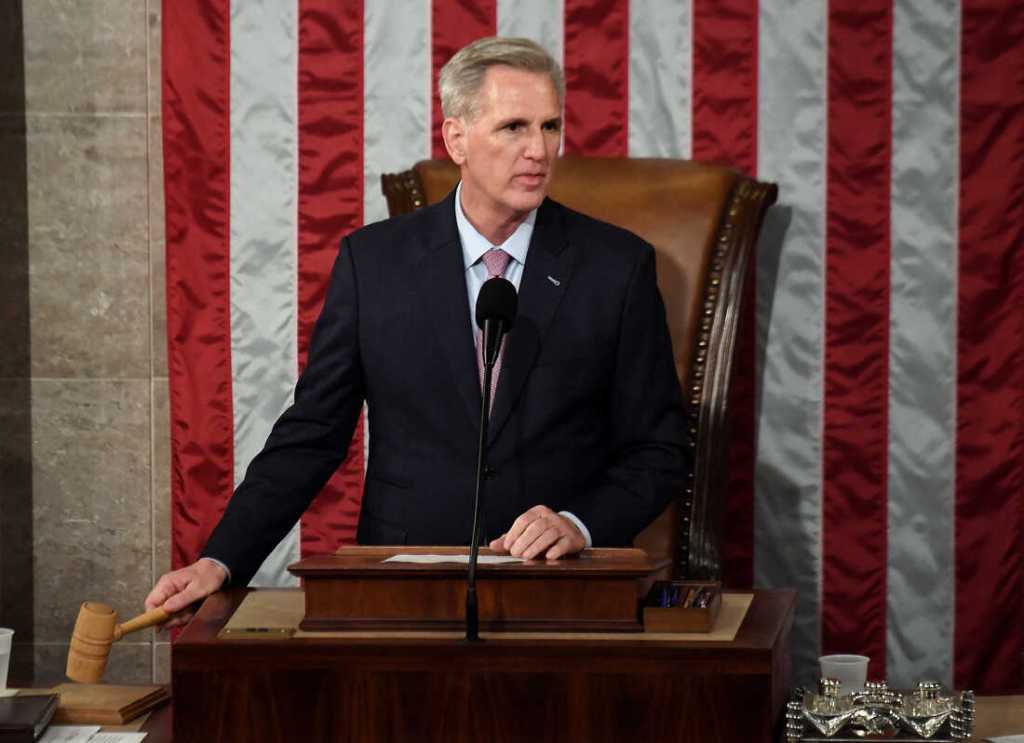
This political development overall should be favorable for the stock market, with the lessening of fiscal inflationary pressures and reduced likelihood of additional sweeping anti-business legislation. The exception in terms of market reaction may be “must pass” legislation that will now be more difficult to enact in a divided government, especially as the rebelliousness of some of the more hardline members of the Republican conference may make compromise with Senate and Administration Democrats more difficult. This difficulty will arise for appropriations bills next year. More immediately it will surface with expected debt ceiling legislation, given that the national debt is now increasing more rapidly as it is being financed at higher interest rates and with the great accumulation of deficits from the multiple trillion-plus dollar COVID relief laws.
The Treasury Secretary forecasts that the debt limit may be reached imminently and managed through creative accounting only until around June of this year. With Republicans insisting on limitations on ongoing spending in exchange for agreeing to debt limit increases and with Democrats apparently refusing, the possibility of default by the government on some debt and a lowering of the federal credit rating must be acknowledged. And as with a previous debt limit standoff during the Obama Administration, the financial markets likely will not react favorably to such developments were they to occur. The tendency of divided governments in the U.S. has been to adopt last-minute resolutions to these sorts of impasses that allow the government to continue spending and operating, which usually produce relief rallies in the very same markets.
III. Start of Fourth Quarter Earnings Reporting Season: Banks’ Earnings Come Down Mildly, as Airlines Surpass Some Key Pre-Pandemic Metrics
By the end of the second week of January 2023, publicly traded companies have finally started the season for announcements of quarterly earnings reports for the fourth quarter of 2022, thereby providing a barometer of actual economic performance amid the uncertain inflationary and recessionary macroeconomic backdrop. As of the writing of this article, only a small handful of companies have reported their earnings. So far, those companies having already reported are primarily financial institutions and airlines. These two sectors are broadly relevant in reflecting the financial health of consumers and businesses in the current slow-growth inflationary economic environment.
The major banks’ reports (J.P. Morgan Chase, Bank of America, Wells Fargo, Citigroup, Morgan Stanley, Goldman Sachs) generally reflect lower earnings but often higher revenue compared to recent quarters, and for the most part earnings that are not dramatically lower. Their declining earnings in large part are a reflection of increased loan loss reserves in the event that they may need to write off potentailly bad debts that consumers and businesses may not be able to pay in a recessionary environment. These provisions are to be expected in this economic situation and may be reversed in the event that the economy does not enter a severe recession. There are also lower fees caused by less merger and acquisition activity in the investment banking sub-sector. New mortgage and existing mortgage refinancing activity for residential real estate has declined precipitously, given much higher interest rates. For some banks, in particular Wells Fargo and Citigroup, restructuring costs and regulatory fines from past transgressions continue to weight negatively on earnings.

On the somewhat positive side, bank earnings reports thus far also reflect increased revenue on loans derived from higher interest rates, to be partially offset by expected lesser increases in interest paid to depositors for funds held at these banks. On balance this situation has led to a more favorable net interest margin in the short term, but the longer-term net interest margin is forecast to decline from their currently high levels. Additionally, there is also more revenue overall from trading activity in this volatile market environment.
As a snapshot of the health of the American consumer, these bank earnings reports generally reflect that overall credit card balances have been increasing, suggesting that pandemic-era savings by an increasing number of consumers has dwindled and debt levels are increasing. Current delinquencies have not appeared to increase appreciably, but the danger remains, relating to the previously mentioned earnings charges for higher loan loss reserves.

As for the airlines, Delta has announced its earnings report for the prior quarter and American Airlines has pre-announced revised guidance for the current quarter pending its regular earnings report slated for the next week. Both airlines show revenue beginning to exceed 2019 pre-pandemic levels, reflecting continued strong demand by consumers for travel, including high-margin business travel, even as overall miles flown has not quite yet surpassed 2019 levels. American Airlines in particular has pre-announced higher than expected first quarter revenue guidance based on strong travel demand. Earnings, however, largely have not yet reached 2019 levels. Among factors negatively impacting earnings despite higher revenue, fuel costs remain elevated compared to pre-pandemic figures, despite recent nearer-term decreases.
Market observers eagerly await a fuller picture from more companies’ fourth quarter earnings reports. Netflix is expected to provide one of the first reports from a major technology company, thereby indicating possible clues to the strength of other parts of consumer discretionary spending.
Thus far these quarterly earnings report strongly suggest that the American consumer remains in a strong fiscal position, especially showing strong demand for travel in the discretionary spending area, but with slowing overall growth and with intermediate-term concerns over higher debt levels and strains on diminishing savings. The strong sector-specific demand for travel also suggests that it may be difficult to constrain inflation in discrete important parts of the economy, which would be consistent with future inflation readings that may stubbornly remain above the Fed’s 2% target, even as they decline from last summer’s historically high levels.
IV. Commentary on Near-Term Market Trajectory and Market FIRE Investing Actions: First Quarter Market Rally Expected, Good Time for Rolling Up Covered Call Options
Based on the above review and outlook, it would appear that the stock market’s overall trajectory for the first and possibly second quarter of 2023 should be positive, providing a bit of a relief rally after the terrible 2022 Bear Market. After analyst sentiment reached almost uniformly bearish levels by the end of 2022, the market was set up for upside surprises after almost any kind of economic developments that were not as bad as feared. The prospects for some kind of “soft-ish landing” by the Federal Reserve — based on steadily declining inflation readings and employment and other growth statistics suggesting that any near-term recession may not be severe — have provided this catalyst for a strong early year market rally.
Uncertain mid-year contingencies need to be resolved before the duration of the next bull leg of the market can be foreseen. By the second quarter, as further inflation readings have been reported and Federal Reserve communications have been provided, we should have a clearer picture about whether interest rates will be maintained at higher for longer periods, or whether they will be reduced towards the end of the year, as anticipated by the bond market and many financial forecasters. If the Federal Reserve stands their ground and follows through with its presently stated position that there will be no rate cuts in 2023, then stocks’ earnings multiple should remain constricted relative to recent historical levels, and earnings could also be expected to be under stress for many technology and other growth stocks that depend on debt for future growth.
By mid-year we should also have a better picture about whether the U.S. is entering a recession, and if so how severe it is. A mild recession may have already been priced into the market for 2022, but anything more severe or protracted will cause future earnings and overall market sentiment to sour, creating a further negative catalyst for stock prices.
From the standpoint of the middle of January 2023, Market FIRE-minded investors should consider selectively adding strong stock to their portfolio in value-oriented stocks, such as industrials, energy, and materials, as well as potentially profitable technology companies that are considered to be “GARP” companies, or “growth at a reasonable price.” Such companies should be well-positioned for a macroeconomic period of slow (but still positive) growth and above-average (though still declining) inflation and still more normalized interest rates. If interest rates actually decline by the end of the year as expected by the bond market, then earlier stage, high-growth but currently unprofitable companies with strong fundamentals will again be worthy of consideration. After the strong run-up in stock prices during the first two weeks of January, any further acquisition of long stock may well be better done if postponed until there is a short-term market pull-back.
Additionally, also from the standpoint of January 2023 but on the short side of the market, Market FIRE-oriented investors should consider holding off on selling covered call options on stocks until the underlying stocks reach above near-term average RSI levels at around 50 or higher. In the alternative, investors should consider writing covered call options only that have delta levels of approximately 0.20. Both of those approaches would be considered conservative options strategies. The first may involve waiting for longer between when buying to close predecessor options and writing or selling to open new options, which would be done at the risk of mistiming the short-term gyrations of the market. On the other hand, the second of these approaches may involve collecting less in premium but while not risking a long period between closure and new options writing. Moreover, for existing options that are not profitable, it may be advantageous to roll these over and preferably up to higher strike prices as soon as practicable based on days until expiration of current options. This should be done relatively soon in order to attempt to avoid a condition where these options would become extremely in-the-money after a potential dramatic run-up in underlying stock price.
With all this expected volatility, Benjamin Graham’s description of “Mr. Market” remains. This “Mr. Market” of the current time is truly manic-depressive, reacting with euphoria in resposne to good inflation or employment news and with a sense of doom in response to bad economic growth or interest rate expectations, with short periods between each ostensible manic-depressive episode. It is left to investors of all types to try to make sense of the basis, if not the extent, of these various moves in either direction, and to position and hedge their portfolios accordingly.
 Stock Market FIRE.com
Leave a comment