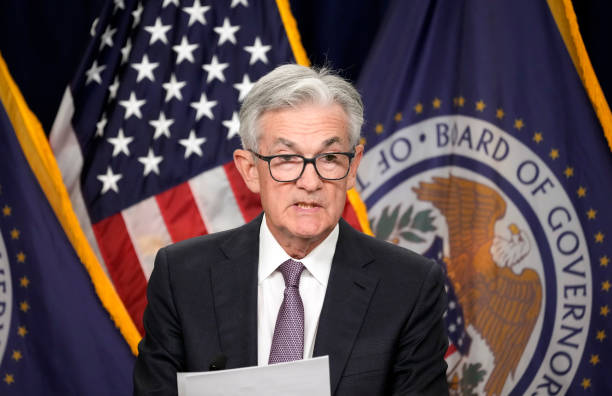
Yesterday, 3/7/2023, Fed Chairman Jerome Powell provided his semiannual testimony to the U.S. Senate Banking Committee, where he stated that higher interest rates than expected will likely be needed to defeat the persistently high inflation levels that currently pervade the economy. This means that the “terminal rate” for the federal funds rate is now expected to be in excess of 5.0%, perhaps approaching 6.0%. Although not surprising based on recent CPI, PPI, and employment data from January 2023, this frank and forthright declarative statement from the soft-spoken Fed Chairman initially jolted the stock market. After the market initially rallied in response to Powell’s typically measured tone, it tumbled, with the S&P 500 closing just under 4000 points at 3986.
Today, 3/8/2023, Chairman’s Powell’s testimony shifted to the House Financial Services Committee. As Congressmen on the committee seemed to focus on narrower areas of financial concern, and as JOLTS data on job openings suggested a slight cooling of the labor market, the stock market appears to have stabilized somewhat with very little change, with the NASDAQ closing up 0.40% at 11,576 and the S&P 500 closing up 0.14% at 3992.
The S&P 500 is still above the 3900 technical level that would appear to mark support for the upward trendline of the overall bullish level of the market since the lows of October 2022. This key index has zigged and zagged, up and down since last October to the point of reaching ever-slightly higher lows and higher highs, over the course of several months. Over much of the past month, the S&P 500 has been declining back towards but still remained above this level of technical support.
Additionally, from a more fundamental macroeconomic perspective, although inflation ratings from January 2023 have been slightly higher than expected, they are still consistent with declining inflation levels overall. They also do not fully include decreasing levels for rent and owner-equivalent rent, because the housing factor will not be updated fully until existing leases expire and roll over to new levels, which will occur gradually over a period of several months. Accordingly, it is expected that future CPI and PPI levels will continue to decline, albeit at something other than the rapid pace that the market expected several months ago. “Higher for longer” may yet be appropriate, but it is not expected that interest rates will need to approach less-normal, more draconian levels, such as above 10%.
Based on the above, it is expected by this author that stocks overall will be starting a new leg higher overall, with the possible exception of highly valued high-multiple or no-multiple technology stocks. The general movement higher should exceed the prior highs from early February of around 4180, but likely not by much due to the slightly increased outlook for terminal interest rates. Upcoming future economic data points that will be key catalysts in confirming or dispelling this projection include next week’s CPI and PPI reports for February 2023 (to be released on 3/14/2023 and 3/15/2023, respectively).
Accordingly, so long as near-term stock market performance is in line with the above projection, Market FIRE-oriented investors (those who use a stock and options portfolio for both short-term living expenses and long-term capital appreciation) should consider using the current expected imminent inflection point to buy-to-close covered call options that are within three weeks of expiration. Depending on the specifics of each underlying stock’s option chain, it is recommended that Market FIRE-oriented investors also consider rolling over these options by selling-to-open new longer dated covered call options with higher strike prices for the same or comparable amounts of premium.
In terms of timing, the second stage of this rolling over can either be done immediately (if feasible) or within the next two weeks if this type of swing trade would be expected to result in the ability to write the new covered call options against stocks at higher underlying market prices. The latter scenario would allow for generating elevated premium levels for most strike prices relative to premium levels for the same strike prices at existing underlying share prices, which would facilitate the ability to roll up strike prices. On the other hand, the time gap between the two steps of rolling over the options creates a risk for unexpected difficulties if underlying market share prices decline before selling the new covered call options. This swing trade option should thus be reserved for instances in which the older covered call is deep in-the-money AND there is reasonable confidence that the underlying share price will increase over the near future. This expectation of share price increase should be reserved for stocks that generally have an RSI of 50 or lower or that show some other technical indicator of imminent price increase (such as inverse head and shoulder, reversal after approaching support levels, or MACD differential nearing positive levels).
With expectations of near-term price appreciation, now may also be an appropriate time to deploy available excess capital to acquiring additional long stock positions in favored sectors as outlined previously in this site (industrials, materials, energy, financials, and reasonably valued tech companies) or to sell cash-secured put options in these same favored sectors.
Risks to this assessment include higher than expected inflation readings in next week’s CPI and PPI reports, geopolitical uncertainty, and the ongoing debt-limit standoff between the parties in the House, Senate, and White House.
 Stock Market FIRE.com
Leave a comment