
Review of Recent Market Developments
Since the last Market FIRE Review, Outlook, and Commentary from February 2023, market developments have led to terminal interest rate expectations to first go up before going down, as hawkish Congressional testimony by Fed Chair Powell was followed by a slightly declining February CPI reading and two regional bank failures that triggered federal intervention and fears of declining economic activity.
A. Powell Testimony to Congress, Suggesting Further Interest Rate Increases
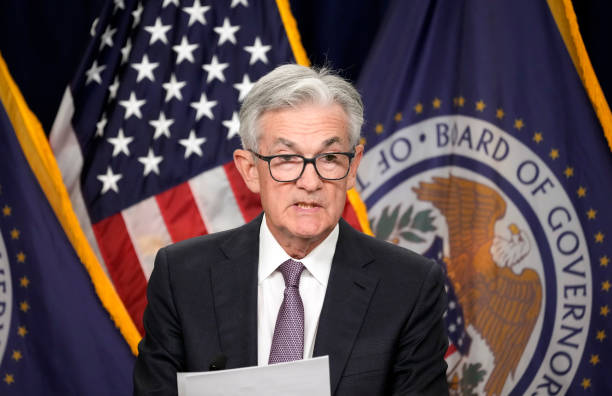
First, the overall stock market seemed to decline in panic as Chairman Powell testified before the Senate Banking Committee and House Financial Services Committee. Following up on the unexpectedly hot January 2023 CPI inflation reading and jobs report, Powell emphasized the need to continue on the Federal Reserve’s course of interest rate hikes. He further stated that the likely terminal rate for the short-term Federal Funds interest rate would likely exceed the levels last approximated by the Board at their December 2022 meeting, based on this recent data. Though the market should not have been surprised by these comments based on the recent data, the straightforward tone of Chairman Powell perhaps drove this point home and underscored market fears of continued interest rate headwinds.
B. Sudden Emergence of Problems in Mid-Size US Banks, Suggesting Slowing Economic Activity and Possible Downward Change in Interest Rate Trajectory
Next, indeed later the same week as Powell’s Congressional testimony, the U.S. banking system showed unexpected signs of stress as a large regional bank that specialized in commercial lending with venture capital firms, Silicon Valley Bank (or SVP), failed as a result of a bank run on deposits that exacerbated poor long-term bond investments of cash on deposit from the venture capital firms. Following the run, the FDIC took over SVP. Another smaller regional bank also failed and was taken over during the weekend.
Investors initially believed that deposits in excess of the federal deposit limit would be lost, until the Treasury Department, FDIC, and Federal Reserve all combined to guarantee all deposits even in excess of federal insurance limits for these two banks, and implicitly for all banks should the need arise. This limited bail-out (which the Biden Administration strained to call something other than a bail-out) would be paid for by fees on depositor institutions, effectively making well capitalized and more conservative banks bail out these arguably irresponsible regional banks that did not make prudent investments in a well-telegraphed rising interest rate environment. The market initially rallied following this federal intervention. Additionally, the market also considered the troubled activity in the banking sector as indicative of generalized economic contraction that could justify the Federal Reserve to either slow or pause its interest rate increases.
C. Inflation and Retail Sales Data Consistent With Cooling But Still-Elevated Inflation and Slowing of Economic Activity
The mid-March release of inflation and retail sales data, as the bank drama was unfolding, seemed to corroborate investors’ expectations for a slowing or pause of the Federal Reserve’s interest rate increases. February’s CPI reading showed an annualized inflation rate of 6.0%–down from 6.4% in January, and a monthly inflation rate of 0.4%–down from 0.5% in January. Housing costs increased in February–something still expected to dissipate in future months as more costly rents are rolled off–as food costs increased but fuel costs and used cars decreased. These figures were largely in line with economists’ consensus expectations.
February’s PPI reading similarly showed a slowing of wholesale price increases to an annualized rate of 4.6%–down from the revised 5.7% from February, and a monthly inflation rate that actually was a decline of 0.1%–down from a January gain of 0.3%. These figures were actually lower than economists’ consensus expectations. Because wholesale prices tend to have a delayed effect on prices paid by consumers, it is expected that the declining PPI could actually presage a near-future greater rate of decline in future prices. Amid panic over the banks, this bit of news seemed to get lost, and may be the basis for future optimism over the course of inflation and ultimately interest rates.
Released the same day as February PPI data, the February 2023 retail sales report showed that such sales actually DECLINED by 0.4%, which was in line with consensus economists’ expectations, in part due to a large decline in automobile sales. Even restaurants and bars experienced a decline, though only coming after large increases in sales in previous months. This report also in consistent with an economy that is cooling, consistent with Powell’s previous observation of “disinflation,” while also not yet suggesting a severe recession based on the lack of evidence of consistent or deep decline in economic activity over a period of several months.
D. Market Gyrations Amid Uncertainty Reflects Technical Levels of Support While Breaking Previous Clear Upward Trend
Since the last Market FIRE Review, Outlook, and Commentary from mid-February 2023, the overall stock market has declined, then had a brief leg up in early March, before sharply declining by the middle of March. The S&P 500 went up to a near-term high of near 4150 in early February to a near-term low of around 3850 on March 10, which was ever-so-slightly higher than the prior near-term low of 3800 from early January, before the initial beginning-2023 rally. As of the writing of this piece, the market appears to have refused to go below 3800 and to have found support at that level. With many stocks in oversold territory, the market appears poised to rally on the semblance of any good news, which could come from bank assistance or a change in tone from the Federal Reserve regarding interest rates.
Nonetheless, although the market appears to have found support well above the late-2022 lows, the markets’ mid-March decline has essentially broken the more bullish pattern of higher lows and higher highs, given that the recent low was not materially higher than the prior low.
Current Revised Market Outlook
Based on the above new market developments, the revised near-term macro-economic outlook is as follows: it is now believed that interest rate increases will substantially slow or completely pause–at least for a short period–which will lower the ultimate terminal rate expectations. This change in trajectory is occurring as previously generalized fears of an economic slowdown of some kind have begun to materialize with more specific contours, in this case the issues with the banking and financial system. This means that inflation will be perceived as less of a problem in the near future than the risk of recession.
Although it is not believed that these financial problems currently pervade most or even a substantial number of banks and other financial institutions, it is believed that the rapid rate of interest rate increases has created large amounts of volatility that have increased the changes that individual isolated banks (such as SVB) will be exposed to risks of failure that are much greater than before the rate-increase cycle began. SVB’s failure largely resulted from risk management failures from that particular institution in buying bonds that predictably decreased in value with interest rate hikes and that were insufficient to generate cash to satisfy depositor redemptions. Signature Bank and Credit Suisse’s issues also resulted from factors traceable to their own particular practices. But of course, it is unknown precisely how many other institutions will experience similar or related problems in this monetary atmosphere.
Even only the uncertainty about the current health of the banking system would be expected to cause some degree of economic slowdown. Uncertainty over the strength of the banking system at a minimum would be expected to lower the overall confidence of economic actors in taking risks associated with making new investments to the degree they otherwise would have. The slowing of the economy, whether it reaches recession or not, is also consistent with recent retail sales, jobs, and inflation data. And if the problems with the banking system in fact do affect even more banks, then the overall effect of the economy will be greater than currently believed.
Market Commentary for March 2023
Based on this outlook, Market FIRE.com now believes that longer-term investors with shorter-term trading positions to support both long- and short-term capital needs should strongly consider revising stock sector preferences and adjusting short-term hedging positions accordingly. To the extent that investors agree that both inflation and economic growth are substantially declining, such investors may want to consider reducing relative exposure to cyclical and industrial stocks, especially ones that do not benefit from longer-term non-cyclical secular trends. These types of companies would include materials and energy stocks that Market FIRE.com has previously favored. Although some exposure to these types of stocks may continue to be appropriate in event that inflation though lower remains elevated, it may now be appropriate to scale back exposure to these sectors compared to previous levels.
Exposure to reasonably valued but still growing technology stocks, which may benefit disproportionately from declining interest rates, should be maintained or increased. Discount retail, which would be expected to benefit in an economic slowdown, could also merit increased exposure in one’s stock portfolio.
Regional bank stocks should be avoided, but large financial center bank stocks may be appropriate in one’s portfolio if attractively valued, though this obviously could be a risky position if issues in the financial services sector are greater than currently believed.
Regarding covered call options, technology stock options should be rolled up and over to the extent practicable, including through limited strategic use of swing trading. For positions such as industrials, financials, materials, and energy that are being retained despite an expectation of near-term decline, those options should be closed soon if profitable and nearing expiration, and then rolled over to strike prices that may be lower than earlier options but that are closer to the current market price. This latter strategy may allow for generating available realistic options premium income while also preserving capital for the underlying stocks in a manner consistent with the current market trajectory for the various stock sectors.
With the Fed’s next interest rate setting meeting scheduled for next week and Chairman Powell’s post-meeting press conference scheduled for next Wednesday, March 22, 2023, Market FIRE-oriented investors should pay particular attention to the financial news and their own portfolios during those two days. If possible, the financial news should be followed in real time during those two days, and in particular during Chairman Powell’s Wednesday afternoon press conference. Stock volatility is usually high during these periods in the Fed’s announcement cycle under Powell, and it is not unusual for stocks to experience extreme movements both to the upside and downside during a brief amount of time. There may well be multiple fast-paced opportunities to profitably close existing covered call options at low points for underlying stock prices, as well as multiple fast-paced opportunities to write new covered call options for relatively high premium at relative high points for underlying stock prices.
With any excess funds (beyond that needed for regular living expenses) generated from selling long stock positions and new covered call options, Market FIRE-oriented investors should also consider acquiring additional long stock position in attractively valued stocks with stronger intermediate or longer term outlooks, such as reasonably valued technology companies and industrial and/or materials stocks that may benefit from secular trends aside from the development of interest rates and inflation (though this latter category may be subject to steeper shorter-term declines). Depending on cash needs and outlook on individual stock price movements, selling cash-secured puts may be an appropriate means of acquiring additional long stock positions while speculating on possible near-term price increases in upwardly moving stocks.
Risks to the overall assessments contained in this article include, but are not limited to, uncertainties over the overall strength of banks and other financial institutions, geopolitical tensions, new deterioration in economic growth indicators such as the jobs market, changes in the trajectory of inflation and interest rates, and greater than expected declines in corporate earnings reports for past and projected future quarterly earnings periods.
As always, any statements in this article constitute commentary only and are not offered as individualized investment or other financial advice. Statements contained herein are offered solely for educational and informational purposes. Investors should consider consulting their own financial and investment advisors and conducting their own research before making any investment or trading decisions.

 Stock Market FIRE.com
Leave a comment