Review of Recent Market Developments
Since the last Market FIRE Review, Outlook, and Commentary from March 2023, the economy and stock market have behaved largely as this site has predicted, with inflation continuing to decrease (albeit to levels still well above the Fed’s 2% target) and recession concerns continuing to abate. If anything, despite the overall downcast tone of forecasters at that time, the economy and market have proven to be even more resilient than this site expected. Yet interest rates are still expected to increase slightly, and the signs of a slowing economy remain. When combined with the lofty current valuations of the stock market, this uncertainty gives rise to the likelihood of a near-term summer pull-back, likely to be followed by a further bull run up for the remainder of the year.
A. Data Reflect Slowing But Still Growing Economy, For Now
As of the time of the last Market Review, Outlook, and Commentary in March 2023, the risk of spreading bank failures beyond SVB scared many investors. Since then, the bank failures, thus far at least, have been contained to the small number of special cases. The other banks subject to the closest federal government regulation have easily passed their “stress tests.” Nonetheless, as even the large mega banks’ second quarter earnings reports have demonstrated, the rising interest rate environment has lowered banks’ profits by increasing the cost of their declining deposit base and thus reducing their net interest income. Large banks have offset this negative factor with higher interest collected on consumer credit card and loan accounts.
Bank data also shows that loan delinquencies have been climbing from their cash-flush pandemic lows, to mostly near or slightly above pre-pandemic 2019 levels, when the economy was considered to be strong. Employment levels continue to remain high, even as new job openings have diminished and layoffs in some sectors (such as tech and other white-collar professions) have increased. Total number of hours worked has also decreased. Nevertheless, overall retail spending has resumed its upward movement at moderate levels that still do not exceed the level of inflation. For the first time in nearly two years, nominal wage increases for most workers have exceeded the level of inflation, for the short-term at least, suggesting that increased purchasing power may be coming down the pike.
Reflecting an ongoing shift in spending from goods to services, industrial output and manufacturing output remain mired in a sector contraction. Oil and natural gas prices have remained unexpectedly low, leading to a decline in rigs drilled. Factory output of durable goods has similarly been considered to be in a contractionary mode. Automotive production, however, appears to have increased as supply chain issues have abated and demand in that sub-sector has remained above historical averages.
With all this in mind, most financial analysts no longer expect an imminent recession during the balance of the year 2023. To the extent that a recession is expected, these analysts tend to believe that it will be postponed until 2024. Still, it is believed the “long and variable lags” associated with the economic impact of higher interest rates over time will continue to slow the economy to an unknown degree. Possible issues related to interest rate increases for smaller and mid-sized banks remain as a potential macroeconomic recessionary headwind. Another potential as-yet unrealized recessionary hurdle is a possible sharp rise in foreclosures of commercial real estate (especially offices) that have already been rapidly declining in value. Similarly, at the consumer level, the slower economy with higher interest rates creates a risk that delinquency rates for auto, credit card, and other personal loans may increase well above current and pre-pandemic 2019 levels, potentially heralding a rise in hazardous economic stress.
B. Federal Reserve Poised For Limited Further Interest Rate Increases, As Inflation Is Reduced to Still-Elevated Levels
Recent inflation readings during the second quarter of 2023 have shown that inflation has receded but is still elevated and remains significantly above the Federal Reserve’s 2% annualized rate target. The headline figure for the Consumer Price Index (CPI) for June 2023 dropped to 3% — the lowest in more than one year. The June PPI (Producer Price Index) similarly declined to the much lower 0.1%, potentially heralding future declines in consumer inflation. Nonetheless, the “core” rate of inflation as measured by the CPI excluding the highly volatile (and less interest-rate sensitive) categories of food and energy remained higher at approximately 4%. Additionally, the monthly rate of inflation slightly increased compared to May 2023. Moreover, the sharp decline in annualized headline CPI inflation was in large part attributable to a statistical quirk caused by the computation rolling off the unusually elevated June 2022 CPI reading. All things considered, many analysts believe that it may be more difficult to cause inflation to decline to 2% than it was for it to decline to 3%, and that fractional increases in inflation may be registered in future months before possibly settling at the Fed’s long-term 2% goal for inflation further down the line.
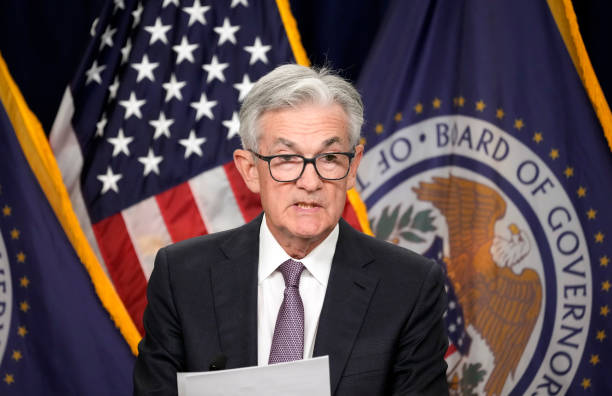
Federal Reserve Chairman Jerome Powell has made clear, both at his June post-FOMC meeting press conference and testimony to Congress, that a further 25 bps interest rate hike is likely to be approved at the FOMC meeting in July, with the possibility that at least an additional 25 bps increase may be approved in September. These statements are in the context of a “hawkish pause” or “skip” taken by the Federal Reserve in holding rates steady at their June meeting, marking the first time the FOMC did NOT increase rates in more than one year, in order to give the committee additional time to assess the effect of past rate increases.
Together, these statements reflect that the terminal rate after all interest rate increases during this cycle may well be 5.5% or higher for a sustained period of time. Rates thus are now expected to be higher than the market and the Fed expected as of the start of this year, even as the pace of rate increases has slowed and participants are now plausibly anticipating the end of the rate hiking cycle. Contrary to the bond market’s prior earlier-year’s assumptions, however, interest rate CUTS are now no longer expected for the duration of the year 2023. Bond yields have adjusted accordingly, as Chair Powell has emphatically rejected any expectation of rate decreases this year. Effectively speaking, the interest rate mantra of the moment is now: “Slightly higher for a good deal longer.”
C. Bull Run of Stock Market Resumes Amid Slowing Inflation and Generative AI Boom
During the last quarter, the stock market has seized on declining inflation and the apparent near-term avoidance of recession to justify breaking through past technical levels of resistance and reaching new 52-week (though not all-time) highs. The S&P 500 in prior months had repeatedly tested and failed to break through a resistance point of approximately 4200, while also remaining above prior support at late-2022 lows. During the balance of the second quarter of 2023, the S&P 500 instead powered upward above 4500.

The unexpected ingredient behind this latest bull market rally has been the emergence of generative AI as a catalyst for expected future gains in productivity across the economy and a nearer term catalyst for greater profits for large tech and advanced semiconductor stocks. The launching by Microsoft of tools from the open-source ChatGPT program, fueled by advanced AI Nvidia chips, followed by the doubling of Nvidia’s forward revenue guidance, pleasantly shocked and intrigued the investment community. By late second quarter 2023, only a small handful of large cap tech companies were responsible for most of the gains in the S&P 500 (led by AI leader Nvidia, along with Microsoft, Meta Platforms, Tesla, Alphabet, Amazon, and Apple). By the start of the third quarter of 2023, the bull market rally appeared to spread to a broader swath of the stock market, including industrials, materials, and financial stocks to some extent.
Third Quarter 2023 Revised Market Outlook
Based on the above economic and market developments, the revised near-term outlook is as follows: it is now believed that interest rate increases will substantially slow and then again pause, but remain elevated, through the duration of the year and into 2024. Inflation may well remain at much more moderate levels compared to 2022 but still exceed the Fed’s 2% long-term target and indeed may experience periods of increase compared to current levels. Problems in the banking system should remain largely contained, but unemployment will likely increase slowly and new job openings will likely continue to decline. Retail spending also may remain moderate without substantially falling, with spending in travel and leisure still expected to be elevated through the remainder of this year. Nonetheless, excitement over generative AI will remain and continue to pervade trading of stocks in large cap tech and semiconductor companies.
Market Commentary for July 2023
StockMarket-FIRE.com believes that the overall stock market may have additional room to run in its current bull market run. Given the outsize increase in stock prices for large cap tech companies and the apparent beginning signs of increased market breadth, it is believed that industrial, materials, large- and mid-cap financials, discount retail, and general small cap stocks may have more room to run than tech stocks during the remainder of the year 2023. Large cap tech stocks with potential revenue streams from the application of generative AI should experience additional price appreciation this year, though likely only after a nearer-term pull-back. Consumer discretionary stocks in the travel sector may also have more room to run, though also likely only after a nearer-term pull-back given rapid increases during the first half. Consumer staples stocks, which have also increased substantially year to-date, may not be able to experience much upward potential this year, given lofty valuations for a typically low-valued sector.
Regarding covered call options, technology stock options should be rolled up and over to the extent practicable, including through limited strategic use of swing trading. For positions such as industrials, financials, materials, and energy, those options should also be rolled up and over to higher strike prices and longer-dated expirations. Given this near-term expected bull market, expected covered call options premium income may well be limited compared to 2022 and parts of 2023. Short-term declines in tech stocks may provide limited opportunities for profitably closing existing covered call options. Such declines may also provide appropriate opportunities to generate additional income through selling cash-secured put options. Such short put options can also be used to generate income for stocks that may not yet have pulled back but that are also not yet considered technically oversold (i.e., those that have an RSI still less than 70).
Upon pullbacks of stocks still well within the secular bull market, long call options should cautiously be used, either as stand-alone or supplemental trading options positions for an underlying stock or as part of a call-spread to offset currently unprofitable short/covered call options. Near-term volatility should be exploited to the extent practicable to close both legs of call spreads in a relatively profitable, non-simultaneous fashion.
Risks to the overall assessments contained in this article include, but are not limited to, uncertainties over the overall strength of banks and other financial institutions, geopolitical tensions, new deterioration in economic growth indicators such as the jobs market, changes in the trajectory of inflation and interest rates, and greater than expected declines in corporate earnings reports for past and projected future quarterly earnings periods. Upcoming quarterly earnings reports and monthly inflation reports should be followed closely, as should new pronouncements by officials from the Federal Reserve, including but not limited to Chairman Jerome Powell.
As always, any statements in this article constitute commentary only and are not offered as individualized investment or other financial advice. Statements contained herein are offered solely for educational and informational purposes. Investors should consider consulting their own financial and investment advisors and conducting their own research before making any investment or trading decisions.
 Stock Market FIRE.com
Leave a comment